
There’s a moment, right as the vanilla bread pudding first hits the oven, when the scents of melting butter and sweet vanilla start to drift through the kitchen. It’s the kind of aroma that pulls people close, whether it’s a lazy weekend morning or a cozy dinner party winding down. I always think of scooping out that first steaming portion, still warm and wobbly, the custard-soaked bread turning gold and crisp on the edges. This vanilla bread pudding isn’t just nostalgic—it’s pure comfort in dessert form, each bite lush with vanilla and silky custard, and always finished with a little pour of homemade crème anglaise. If you’re looking for something that blends the simple with a touch of elegance, this will be your new favorite.
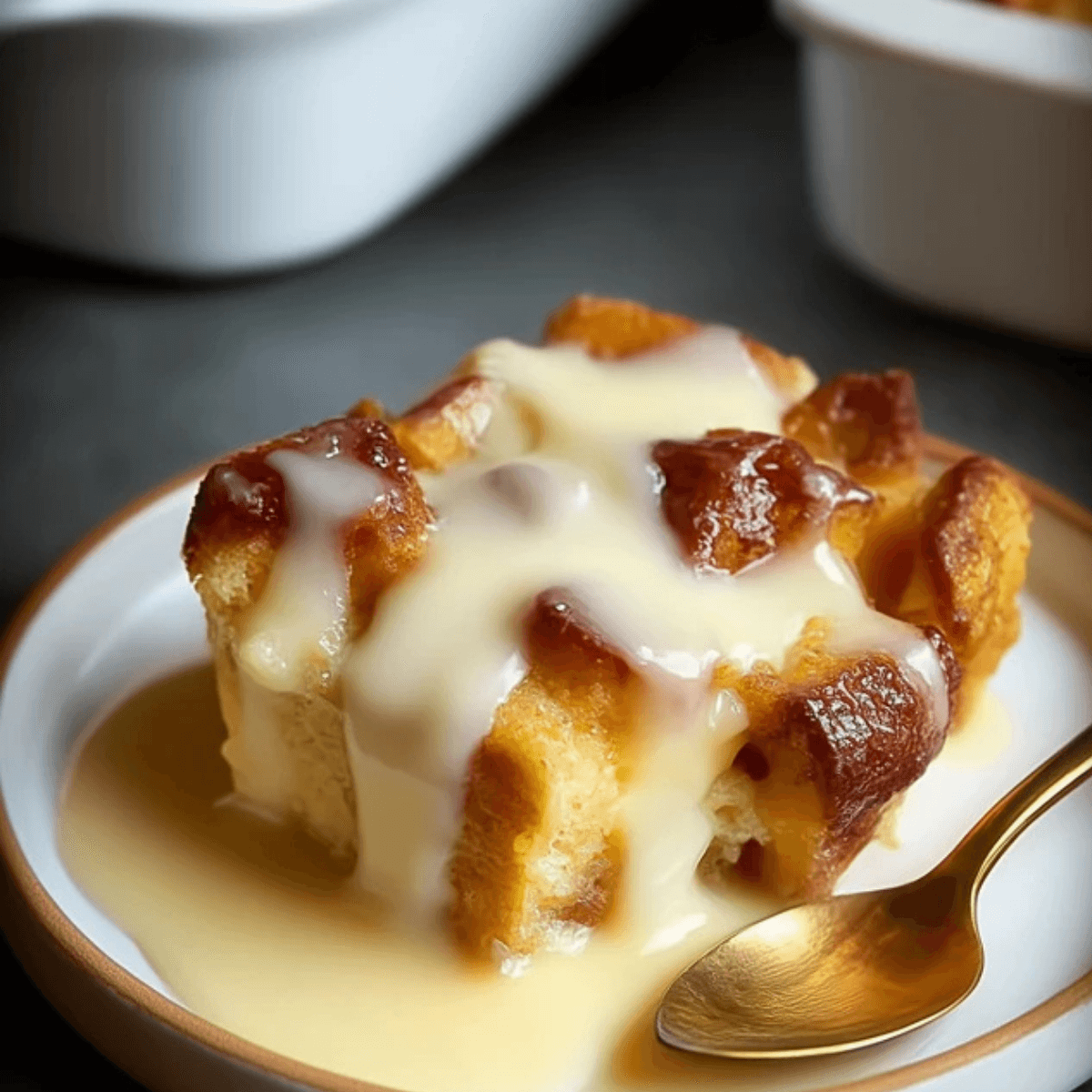
Table of Contents
What Makes This Vanilla Bread Pudding So Irresistible
There’s just something timeless about vanilla bread pudding. It’s simple at its core—soft cubes of bread soaking up a vanilla-scented custard, baked until the top turns beautifully golden and the inside stays silky and soft. The magic comes from that contrast: the crisp, caramelized corners mingling with the delicate, melt-in-your-mouth middle. And then there’s the finishing touch—a drizzle of homemade crème anglaise, which makes each bite even more luscious. Whether you serve it for a Sunday brunch or at the end of a family meal, this dessert brings an old-fashioned comfort that always feels a bit special.
The Ingredients That Make Every Spoonful Special
Every ingredient in this vanilla bread pudding plays its part, working together to deliver both effortless prep and bakery-worthy flavor. Here’s why each one matters—and how you can make it your own:
- Soft, sweet rolls or brioche loaf – The base for the pudding, these breads soak up custard while holding their shape, creating a fluffy interior. Use slightly stale bread for the best texture.
- Butter – Adds richness to both the custard and the baking dish, giving the edges that tempting golden finish.
- Eggs and extra yolks – The combination offers just the right custardy texture—set but still creamy.
- Whole milk – Lends the pudding most of its silky mouthfeel and keeps the finished dish tender.
- Heavy cream – Takes the luxury up a notch, making every bite even more decadent and lush.
- Granulated sugar – Sweetens the pudding just enough and helps brown the top to a delicate crunch.
- Vanilla extract or vanilla bean paste – This is where the perfume of the dessert comes from—use real vanilla or even scrape in a vanilla bean for a fancier treat.
- Pinch of salt (optional) – Balances the sweetness and deepens the overall flavor.
See the recipe card below for the full list of ingredients and measurements.
Bringing This Vanilla Bread Pudding Together Step by Step
Making vanilla bread pudding might feel old-fashioned, but the steps are pleasantly straightforward. Here’s how I bring it all together, from drying the bread to serving that dreamy sauce on top:
- Generously grease a ceramic or glass baking dish—this not only helps prevent sticking, but also lets the sides turn beautifully golden as they bake.
- Cut your bread into chunky cubes. I like to leave them uneven for that perfect mix of custardy and crispy bites. Scatter them loosely in the prepared dish.
- In a saucepan over gentle heat, whisk together eggs, extra yolks, milk, cream, sugar, vanilla, and the butter. Warm the mixture until the butter is fully melted and everything’s smooth, but don’t let it boil—you want warmth, not scrambled eggs.
- Pour almost all of your custard evenly over the bread cubes, holding back just enough for the sauce you’ll make later. Use a spoon or your hands to gently press the bread down, helping it soak up every drop.
- Bake until you notice the top turning a deep golden brown and the center only just set—a slight wobble means your pudding will be moist and not dry.
- While the pudding bakes, gently reheat the reserved custard on the stove. Stir until it thickens enough to coat the back of a spoon, then strain if it’s not completely smooth. This is your quick crème anglaise.
- Spoon out the bread pudding while it’s still warm and cozy, finishing each serving with a drizzle of vanilla sauce. A dusting of powdered sugar isn’t required, but it feels just right.
How To Achieve a Custardy Center with a Golden Crust
The real joy of vanilla bread pudding is that contrast between a creamy, almost spoonable center and a crackly, buttery crust. Using slightly stale bread is key—it soaks up custard without getting mushy. Don’t skip pressing down the bread before baking; it encourages even soaking and helps the pieces bake up custardy underneath while crisping up on top. The baking dish matters too: ceramic or glass gives the best, most even oven heat, making those edges extra golden. I always check for a gentle jiggle in the middle before pulling it from the oven. That little bit of wobble means you won’t have a dry pudding, and it’ll firm up perfectly as it cools for a few minutes.
Simple Tips, Variations, and the Best Ways to Serve
Vanilla bread pudding loves a little flexibility, which is part of why it’s such a reliable favorite. Try swapping in challah if you can’t find brioche or sweet rolls. For bolder flavor, infuse your custard with a cinnamon stick or toss a handful of dark chocolate chips among the bread cubes. If you need a dairy-free version, full-fat coconut milk makes a surprisingly rich alternative in the custard. Bread pudding actually tastes just as good reheated the next day—cover and store leftovers in the fridge, then warm individual portions gently in the oven or microwave. I always serve mine with a generous drizzle of crème anglaise, but a scoop of vanilla ice cream on the side turns it into something really memorable.
FAQs about Vanilla Bread Pudding
Can I use regular white bread instead of brioche or sweet rolls?
Absolutely, though the texture will be firmer and less rich. For best results, use bread that’s at least a day old so it holds up to the custard, and try to pick a loaf with some structure rather than something too soft.
How do I store leftover vanilla bread pudding?
Let your bread pudding cool completely, then cover it and refrigerate. It keeps well for up to three days. Just reheat individual servings before enjoying to revive all that tender, custardy goodness.
Can vanilla bread pudding be frozen for later?
Yes! Cool the pudding fully, then wrap portions tightly or transfer to a sealed container. It freezes well for up to two months. Reheat in the oven straight from frozen for best texture, adding a splash of milk if needed.
Should the crème anglaise be served hot or cold?
Either works, but I love pouring it warm over just-baked vanilla bread pudding so it soaks into all the nooks and crannies. If you have leftovers, the sauce can be chilled and served cold—just give it a good stir before using.
Can I make vanilla bread pudding ahead of time?
You sure can. You can assemble the bread and custard, cover, and refrigerate overnight before baking the next day. Or go ahead and bake it in advance, then rewarm gently before serving—it’s incredibly forgiving.
The warm scent of vanilla and toasted bread is the kind of thing that feels like a hug from the oven. Every time I make this vanilla bread pudding, it reminds me how simple ingredients—soft bread, eggs, and real vanilla—can turn into a dessert that’s both homey and elegant. A scoop, a drizzle of that creamy sauce, and a few quiet, happy minutes at the table—sometimes that’s all you need.
More Delicious Recipes
- Tiramisu Brownies: These decadent brownies combine rich chocolate with coffee flavors, echoing the comforting essence of your vanilla bread pudding.
- Mini Lemon Meringue Tarts: The bright citrus and creamy textures of these tarts provide a fresh contrast to the luscious vanilla bread pudding.
- Banana Bars with Cream Cheese Frosting: These soft banana bars are a comforting dessert similar in texture, perfect for any occasion alongside your bread pudding.

Vanilla Bread Pudding
Ingredients
Equipment
Method
- Preheat oven to 350°F (175°C). Generously butter a 7×11 inch ceramic or glass baking dish.
- Cut the bread into large cubes, around 1.5–2 inches. Place them in the prepared dish in a loose, uneven layer.
- In a medium saucepan, whisk together eggs, yolks, milk, cream, sugar, vanilla, and butter. Cook over medium-low heat, stirring often, until the butter melts and everything is well combined. Do not let the mixture boil or thicken.
- Pour most of the custard mixture over the bread in the dish, saving about 1.5 to 2 cups. Gently press the bread down so it absorbs the liquid evenly.
- Bake the pudding for 35–40 minutes, until the top is golden and the center is just set with a slight jiggle.
- While it bakes, return the reserved custard to the stove over low heat. Stir constantly until slightly thickened and it coats the back of a spoon. Strain if needed to remove any curdled bits. This will be your crème anglaise.
- Serve the bread pudding warm with a drizzle of the vanilla sauce and a dusting of powdered sugar, if desired.