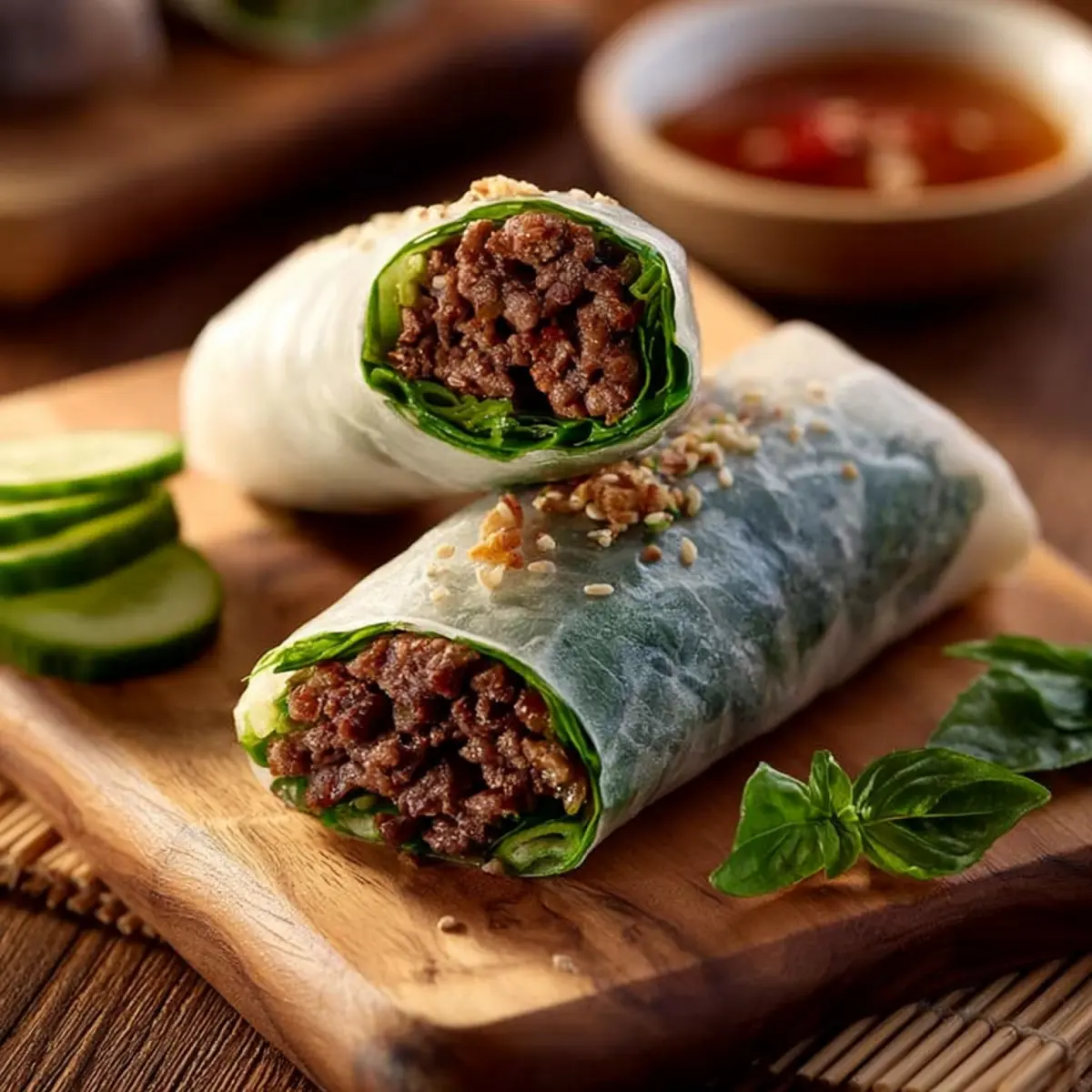
I’ve had my fair share of rice paper drama: wrappers that crack, fillings that tumble out, sticky rolls glued to the counter. If you’ve been there, too, you’ll love this Vietnamese Beef Spring Rolls recipe. The trick is in the rolling station—keeping those wrappers right at the edge of soft and sturdy.
Once you nail the wrapper, every bite is a bright, juicy mix of savory beef, crisp cucumber, and fresh herbs. It’s the kind of hands-on meal that makes dinnertime feel special without being fussy.
Restaurant-Style Vietnamese Beef Spring Rolls at Home
If you’re craving those fresh, restaurant-style Vietnamese Beef Spring Rolls but want to skip the takeout, this recipe delivers. It’s all about contrasting textures: warm, juicy beef infused with hoisin and sesame, tucked beside cool, crunchy cucumber, sweet carrot, and a burst of herbs. Each roll is a satisfying bundle that’s vibrant and fresh with zero greasy aftertaste. The best part? The rolling technique actually works—wrappers stay soft and supple, never torn or sticky. These make a standout appetizer, picnic lunch, or light dinner, and are just plain fun to make with family or friends around the kitchen counter.Essential Ingredients for Beef Spring Rolls
To build the perfect Vietnamese Beef Spring Rolls, you want the freshest flavors and a little prep. Here’s how each ingredient brings something special to the table:- Beef – The juicy, savory star of your filling; go for ground beef for maximum flavor and tenderness.
- Hoisin sauce – Sweet, salty, slightly tangy base for both the cooked filling and dipping.
- Sesame seeds (toasted) – Add a nutty note and pretty pop of texture.
- Cucumber – Crisp, cool, and hydrating; gives each bite a refreshing crunch.
- Carrot – Julienned for color and sweet, earthy snap.
- Fresh mint leaves – Bright aromatic layer for classic Vietnamese flavor.
- Fresh basil leaves – Peppery and fragrant, pairing beautifully with beef and herbs.
- Rice paper wrappers – Essential for rolling everything up tightly and keeping it fresh.
- Vegetable oil – For browning the beef (use any neutral oil on hand).
- Salt and pepper – To season your filling to perfection.
See the recipe card below for the full list of ingredients and measurements.
Step-by-Step: How to Roll Vietnamese Beef Spring Rolls
Rolling spring rolls at home is easier than you think—and actually a lot of fun. Here’s your guide for getting perfectly wrapped, restaurant-style rolls every time:- Heat the oil in a skillet over medium. Add the ground beef, breaking it up as it cooks. Watch for the beef to turn rich brown and glisten as the juices bubble away and your kitchen fills with a toasty aroma. Once it’s fully cooked and crumbly, stir in hoisin sauce, sesame seeds, salt, and pepper. Let it simmer and thicken, then set aside to cool slightly.
- Set up your rolling station: pour warm water into a shallow dish, lay a clean kitchen towel on your counter, and top with a damp paper towel. This combo keeps the rice paper wrappers just moist enough—pliable, never soggy.
- Dip one rice paper wrapper in the warm water for just a few seconds, then transfer it to your towel setup. The wrapper continues to soften as you build the roll.
- Layer cooked beef, cucumber sticks, julienned carrot, and a generous handful of mint and basil leaves in the lower third of the wrapper. Don’t overload—less is more for a tight, neat roll.
- Fold the sides over the filling, then roll from the bottom up, tucking in the filling as you go. When you’re finished, the roll should be firm and smooth, with the seam sealed underneath.
- Repeat with the remaining wrappers and filling. Serve fresh with extra hoisin sauce on the side for dipping.
Pro Tips and Troubleshooting for Spring Roll Success
With these tips, you’ll avoid all the classic spring roll pitfalls and enjoy tender, flawless rolls every time:- Don’t over-soak the rice paper—just a few seconds in warm water is enough. It should feel slightly firm when you set it on the towel; it will keep softening.
- Prevent sticking by working on a damp towel surface, and avoid stacking finished rolls (they’ll glue together fast!).
- If your wrapper tears, double-wrap by rolling it in a second moistened rice paper sheet.
- Keep fillings dry—pat cucumbers and carrots with paper towels if they’re very wet. Too much moisture can weaken the wrap.
Creative Variations and Serving Ideas
Vietnamese Beef Spring Rolls are endlessly versatile and taste great with a variety of tweaks. Swap ground beef for ground pork, chicken, or even tofu for a lighter take. Add other crunchy veggies like bell peppers, shredded lettuce, or bean sprouts for extra freshness. For dipping, hoisin is classic, but a spicy peanut sauce or nuoc cham are delicious twists.Serve your spring rolls chilled or at room temperature. They’re perfect for dinner parties, potlucks, or light weekend lunches. For a more filling meal, pair them with a bowl of rice noodle salad or a cool cucumber slaw.
Storing and Reheating Vietnamese Beef Spring Rolls
Vietnamese Beef Spring Rolls taste best made fresh, when the wrappers are still springy and the veggies crisp. But if you have leftovers, wrap each roll individually in plastic wrap to prevent sticking and drying out. Store in an airtight container in the fridge, ideally eating within a day.Reheating isn’t recommended—you want to keep the fillings cool and the vegetables crunchy. If the wrappers stiffen a bit, you can wrap the rolls in a damp paper towel and rest for a few minutes at room temperature to refresh them.
FAQs about Vietnamese Beef Spring Rolls
Can I make Vietnamese Beef Spring Rolls ahead of time?
You can assemble them a few hours ahead, but for the best texture and flavor, enjoy the same day. To prevent sticking and drying, wrap each roll individually and keep chilled until serving.
What can I substitute for beef in these spring rolls?
Pork, chicken, or tofu all work as filling substitutes—just season and cook them as you would the beef. Seafood like shrimp can also be a great fresh option.
How do I keep rice paper from tearing while rolling Vietnamese Beef Spring Rolls?
Make sure not to over-soak the rice paper and always work on a damp towel surface. If you have trouble, double-wrap the rolls or let the wrappers sit briefly after dipping for easier handling.
How should I store leftover Vietnamese Beef Spring Rolls?
Wrap leftovers individually and store in the fridge in an airtight container. They’re best enjoyed within 24 hours for optimal freshness and texture.
Bring Vietnamese Beef Spring Rolls to Your Table
It’s amazing how a handful of fresh herbs and crisp veggies, rolled with tender beef and slick hoisin glaze, becomes a meal that feels so vibrant. Vietnamese Beef Spring Rolls let you play with flavor and texture, every bite bundled up and ready to dip. Serve them on your favorite platter, with bright herbs peeking out and a bowl of sauce alongside, and get ready for hands reaching across the table.What To Try Next
If you love fresh, flavorful meals, these recipes are great to explore after your spring rolls.
- Aloha Grilled Pineapple Chicken — combines bright, fresh flavors with grilled protein for an easy dinner twist.
- Classic Ranch Dressing Takes 3 Ingredients — perfect for making quick dips or dressings to accompany fresh wraps and rolls.
- Stuffed Cabbage Rolls — a comforting, rolled dish with a hearty filling that contrasts nicely with light spring rolls.
Recommended Equipment


* As an Amazon Associate, I earn from qualifying purchases. There is no extra cost to you.

Beef Spring Rolls
Ingredients
Equipment
Method
- Heat oil in a skillet over medium heat. Add ground beef, breaking it up with a spoon. Cook 5-7 minutes until browned and cooked through. Stir in 2 tablespoons hoisin sauce, sesame seeds, salt, and pepper. Cook 2 more minutes until saucy and thickened. Remove from heat and cool slightly.
- Prep your rolling station: Fill a shallow dish with warm water. Lay a clean kitchen towel on a work surface and top with a damp paper towel. This keeps wrappers moist without sogginess, solving the