The first time I baked an Irish Apple Cake with Custard Sauce, it was a chilly afternoon teetering between late winter and those first shy hints of spring. The kitchen filled up with the kind of spicy, floral aroma that makes people glance up from their phones and ask, “What on earth are you making in there?” There’s something almost secretive about this cake—golden, crumbly, nestling tender hunks of tart apple, all crowned by a sugared crust and laced with warm spices. But the real magic? When you spoon over a puddle of homemade custard sauce, so silky and luxurious it feels like a blanket on the tongue.
If you’ve ever found yourself wishing for a dessert that straddles comfort and celebration—whether for St. Patrick’s Day or simply because you’re craving something a little nostalgic—this is the classic that answers that call. Some cakes feel overly formal, like you need a linen tablecloth and the good plates. Not this one. You’ll want to slice it warm, maybe even straight from the pan, with friends and family leaning in for just a little more.
When Tradition and Temptation Collide in This Cake
There’s a kind of folk-magic to Irish baking—a sense that every loaf and crumb is stitched with a thousand memories. Irish Apple Cake with Custard Sauce has that same homespun warmth, but there’s an edge to it too: the tart snap of Granny Smith apples, the dark symphony of cinnamon, nutmeg, and cloves. This isn’t a fussy dessert, but it carries the weight of tradition, whispering of farmhouse kitchens and misty mornings.
What’s wild is how simple the ingredients are, yet each step coaxes out something more: rich butter meeting sharp fruit, a batter that goes from shy and lumpy to a bubbling cake with sugared peaks in the oven. And when you spoon over that homemade custard—eggy, smooth, deeply vanilla—you see why the pairing is legend. The two meet on the plate and suddenly, everyone’s fork is angling for another try.
The Ingredients That Build Something Special
- Flour – the backbone for structure, keeps the cake tender and gives just enough body to support every apple bite.
- Baking powder – a leavening agent that helps the cake rise and develop a soft, homemade crumb.
- Salt – a little salt makes each flavor pop and balances the sweetness.
- Cinnamon – lends warmth and coziness without overwhelming the apples.
- Nutmeg – brings complexity, almost a history-in-each-bite kind of spice.
- Cloves – a subtle, fragrant note that lingers after each mouthful.
- Butter – infuses richness; cold gives pockets of melt, room-temp creates an even, tender blend.
- Sugar – brings out the sweetness in apples and creates that signature sugary crunch on the crust.
- Eggs – hold everything together and make the cake super moist.
- Granny Smith apples – tart and crisp, they hold their shape and balance all that spice and sweetness.
- Whole milk – keeps the crumb lush and smooth; you could use another milk, but it won’t taste quite as silky.
- Egg yolks – for the custard, these build body and that dreamy golden hue.
- Vanilla – the finishing touch in the custard, deepening the aroma.
- Extra sugar (for topping) – turns into a crackly, caramelized crown as the cake bakes.
See the recipe card below for the full list of ingredients and measurements.
From Batter to Oven: The Cake Begins
Start with an oven preheating—it’s the sort of thing I always forget, then have to tap my foot impatiently while the kitchen starts to fill with a gentle hum of warmth. Grab your baking pan (eight or nine inches works best, depending whether you want a taller cake or just a touch more surface for crust) and really butter those sides. Line the base with parchment if you want to dodge any sticking drama later.
Peel and dice the Granny Smith apples. Freshness here is everything! The knife resistance as you slice is a hint of the tart bite they’ll hold on to even after baking.
Now, pull out your biggest bowl—one that welcomes a little mess. Sift or whisk together all the dry ingredients: flour, baking powder, salt, and all those glorious, ancient spices. Stop and breathe in. You’ll sense November afternoons and Christmas mornings all at once.
Cube your butter, whether cold or slightly soft, and work it into the dry mixture with your fingers or a pastry cutter until it looks shaggy—a few bits of butter left is good. Sprinkle in sugar; toss in diced apples and roll them around so every piece is dusted in spicy, floury goodness.
In a separate bowl, beat together your eggs and milk. Pour this mixture slowly into your flour-apple mountain, folding everything gently with a spatula or wooden spoon. Don’t expect a pourable batter—this one’s drier, almost more like a heavy scone dough.
Scoop the whole lot into your lined, greased pan. Press it gently into the corners—I’ve often found an old spatula or even damp fingers do the trick. Finally, scatter a little extra sugar over the top. Into the oven it goes.
Slide the cake into the middle rack and let the magic happen as the air grows thick with apple and spice. Check after the suggested time with a toothpick; you want it to come out mostly clean, catching just a few moist crumbs. Let the cake cool a bit in the pan before turning it onto a rack, but don’t wander off too far—the urge to sneak a slice while it’s still warm is hard to resist.
Simmering Custard and Other Finishing Touches
While the cake bakes and the smell lures in unsuspecting family or neighbors, it’s time to tackle the custard sauce. This part feels almost meditative, slow and careful—a recipe inside a recipe.
Whisk egg yolks with sugar in a bowl until they thicken a little and lighten in color. Meanwhile, set a saucepan on the stove and gently heat the milk. Watch for steam, not bubbles—if the milk boils, the custard risks turning grainy.
Now, this bit’s crucial: steadily stream a little of the hot milk into your yolks, whisking all the while. Too fast and the eggs will scramble (and that’s breakfast, not dessert). Bit by bit, combine the rest, then return the mix to your pan. Stir over low heat. Yes, it will seem slow. That’s exactly right. You’ll know it’s ready when the custard will coat the back of a spoon, still runny but not watery. After a brief rest, whisk in the vanilla and let the sauce cool to your preferred temperature.
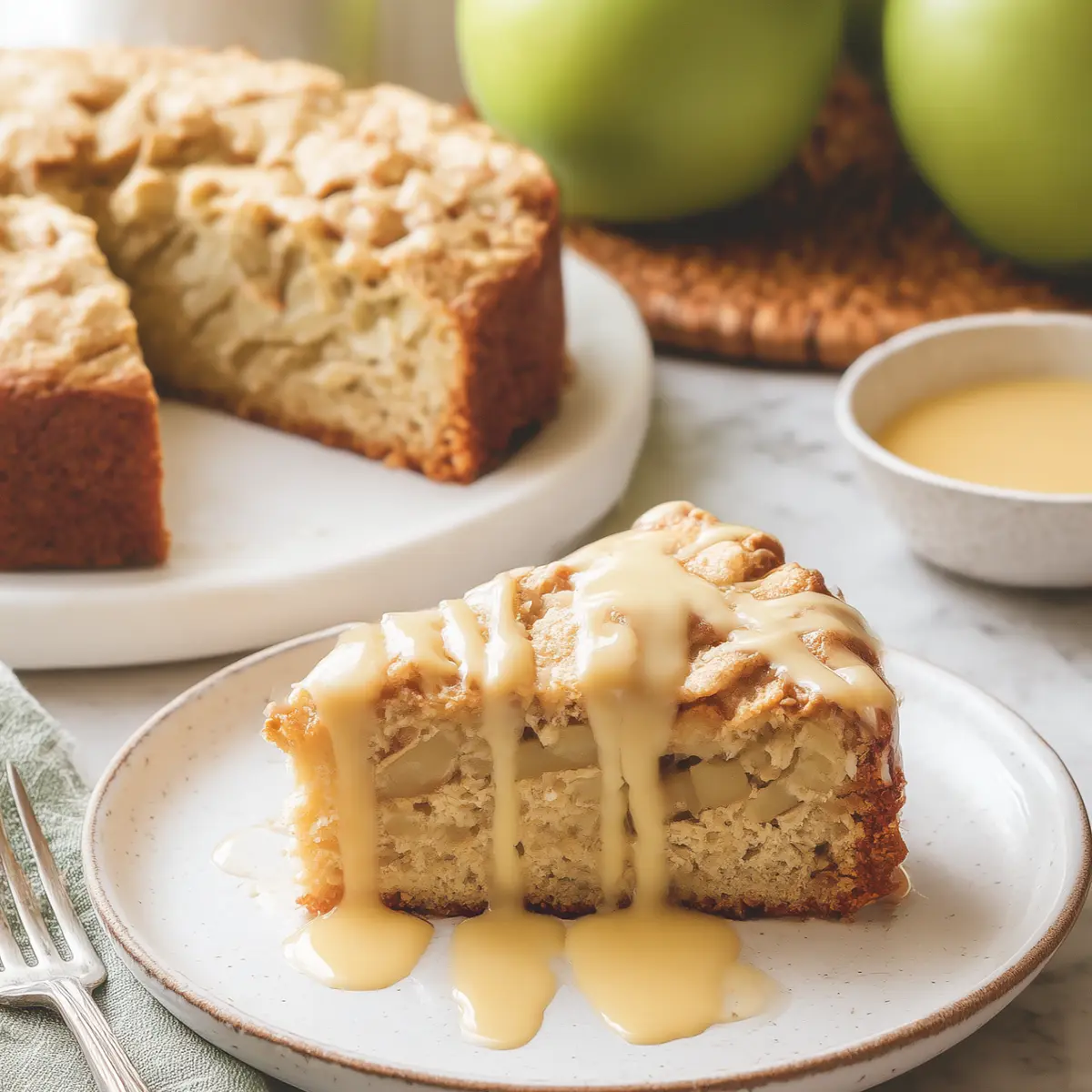
Pour it generously over your cake or offer it in a jug at the table—there’s nothing quite as inviting as watching pale gold custard pool around a warm, apple-filled slice.
Texture, Flavor, and the Chill of the Custard
The first forkful of Irish Apple Cake with Custard Sauce is a play of contrasts: the cake itself is softly spiced with a crumb that leans rustic—never too light, never dense—carrying golden pockets where apples have sunk and released their tartness. That sugar-strewn crust crackles beneath the teeth. The custard is chilled or warmed, whichever you love best, but always silken as it oozes around the edges of each wedge.
The flavor? Deeply layered. Sweetness doesn’t shout but whispers; the apples shine, spiced and a little sharp, while every bite hums with familiarity. It’s the sort of dessert that feels like both a celebration and a quiet, comforting moment—one you’ll reach for in any season.
Tips, Twists, and Little Secrets
Baking this cake is forgiving, but here’s how to avoid a few classic pitfalls. Use apples that are tart and firm—Granny Smiths are my favorite, but a mix with something sweeter works if you’re feeling bold. When blending the butter into the flour, stop while there are still small, visible bits; this keeps the cake more tender and crumbly.
Don’t over-mix! The dough should be thick and almost awkward to stir, but that’s exactly what gives the final cake its wonderful texture.
Can’t find whole milk? A splash of cream or even a good-quality plant-based milk works, though you’ll get softer, richer custard with the real stuff. For extra decadence, a handful of raisins or sultanas folded in with the apples is a nod to traditional Irish bakes.
This cake tastes lovely at room temperature, but it can be gently reheated, wrapped loosely in foil for a few minutes in a low oven. The custard can be served either warm (for the coziest effect) or cold (for the contrast)—just stir it before serving if it’s set a little thick.
Leftover cake keeps for a day or two, covered, in a cool kitchen. Custard should be refrigerated and enjoyed within two days.
Serving It Up to Steal the Show
There’s no wrong time to serve up Irish Apple Cake with Custard Sauce. It makes a glorious finish to a big family meal—the kind where people linger and argue over the last forkful—but it’s equally at home alongside an afternoon cup of strong black tea or even as a sneaky breakfast treat. On St. Patrick’s Day, it’s tradition with a wink; on a dreary Tuesday, it’s pure comfort.
You can swap the custard for softly whipped cream or clotted cream if that’s your preference (I admit: sometimes I do both, and nobody complains). For something extra dramatic, serve with a dusting of powdered sugar or scatter a few toasted chopped nuts over the top. And if you find a few slices leftover, they’re honestly even better the next day—if they survive that long.
FAQs about Irish Apple Cake with Custard Sauce
Can I make Irish Apple Cake with Custard Sauce ahead of time?
Absolutely. You can bake the cake a day in advance and store it, covered, at room temperature. The custard sauce can be made ahead as well—just keep it refrigerated and give it a quick stir before serving. For the best experience, reheat the cake gently and warm the custard if you want that comforting temperature contrast.
How should I store leftover Irish Apple Cake with Custard Sauce?
Store leftover cake covered at cool room temperature for up to two days, or in the fridge if your kitchen runs warm. Keep the custard sauce in an airtight container in the refrigerator and eat it within two days. Don’t leave custard at room temperature for long periods, as it’s perishable.
Can I freeze this cake or the custard sauce?
The cake itself freezes very well; just wrap it tightly in plastic or foil and freeze for up to two months. Thaw at room temperature before serving. Custard sauce doesn’t freeze as successfully—the texture can become grainy once thawed—so it’s best made fresh.
What’s the best way to reheat and serve Irish Apple Cake with Custard Sauce?
For warm cake, wrap in foil and reheat in a low oven until just heated through. The custard sauce can be gently rewarmed in a saucepan over low heat, stirring to restore smoothness. Pour the custard over slices right before serving to avoid sogginess.
When you serve up Irish Apple Cake with Custard Sauce, you aren’t just bringing a dessert to the table—you’re sharing old-world comfort and a gentle kind of celebration. The tang of apples, a little hit of spice, and the slow luxury of homemade custard make every bite a memory in the making. It’s the sort of recipe you’ll pull out for brunches and birthdays, or on the rare night you want the taste of somewhere else, right in your kitchen. Trust me, it never sticks around long.
More Delicious Recipes
- Irish Cream Poke Cake: This cake also celebrates Irish flavors, perfect for a festive occasion like St. Patrick’s Day.
- St. Patrick’s Day Lucky Charms Rice Crispy Treats: These fun and colorful treats bring a playful twist to traditional Irish celebrations.
- Apple Brownies (Apple Blondies): Featuring apples, this dessert offers a delicious alternative that aligns with the cozy apple flavors you love.

Recipe for Irish Apple Cake with Custard Sauce
Ingredients
Equipment
Method
- Preheat the oven to 375 degrees.
- Grease an 8 or 9 inch baking pan on the bottom and the sides. Then line the bottom with parchment paper.
- Wash, peel and dice the apples. Set aside.
- Sift or whisk the flour, spices, salt and baking powder together in a large mixing bowl. This will be the main mixing bowl so make sure it is large enough for the dough and apples.
- Cut the butter into the flour mix.
- Mix in the sugar and then add the apples and coat them with the mix.
- Whisk together the milk and the eggs. Add this to the flour and apple mix and mix with a large spatula or wooden spoon. The batter will be really thick.
- Add the dough to the prepared cake pan and smooth the top of the batter. Make sure that the batter all the way down in the cake pan along the sides too.
- Sprinkle the additional sugar over the top of the cake.
- Bake for 45-50 minutes. Use a tooth pick or a bamboo skewer to test for doneness in the center.
- Let the cake cool in the pan for 10 minutes and then transfer to a wire rack.
- Serve warm or cold with the custard sauce or clotted cream!
- Whisk together the eggs and the sugar.
- Add the milk to a sauce pan on the stove and set the flame to medium to low. Keep an eye on it to make sure it's not boiling or even simmering. You want to steam it so when you see steam coming off the surface of the milk, it's done.
- SLOWLY whisk together a little bit of the milk with the egg mix. You do this slowly to keep the eggs from scrambling. Add the milk little by little, whisking gently.
- Once all the milk has been added to the egg mix, add everything back to the sauce pan and heat over low. Whisk slowly and frequently to ensure the eggs aren't scrambling. The idea is to cook them so slow they create custard. it will take 5-10 minutes. You will know it is done when the custard mix coats the back of the spoon nicely but is still runny.
- Remove it from the heat and let it rest. Continue to slowly mix every now and then. After about 10 minutes whisk in the vanilla.
- The custard sauce can be served warm or cold.