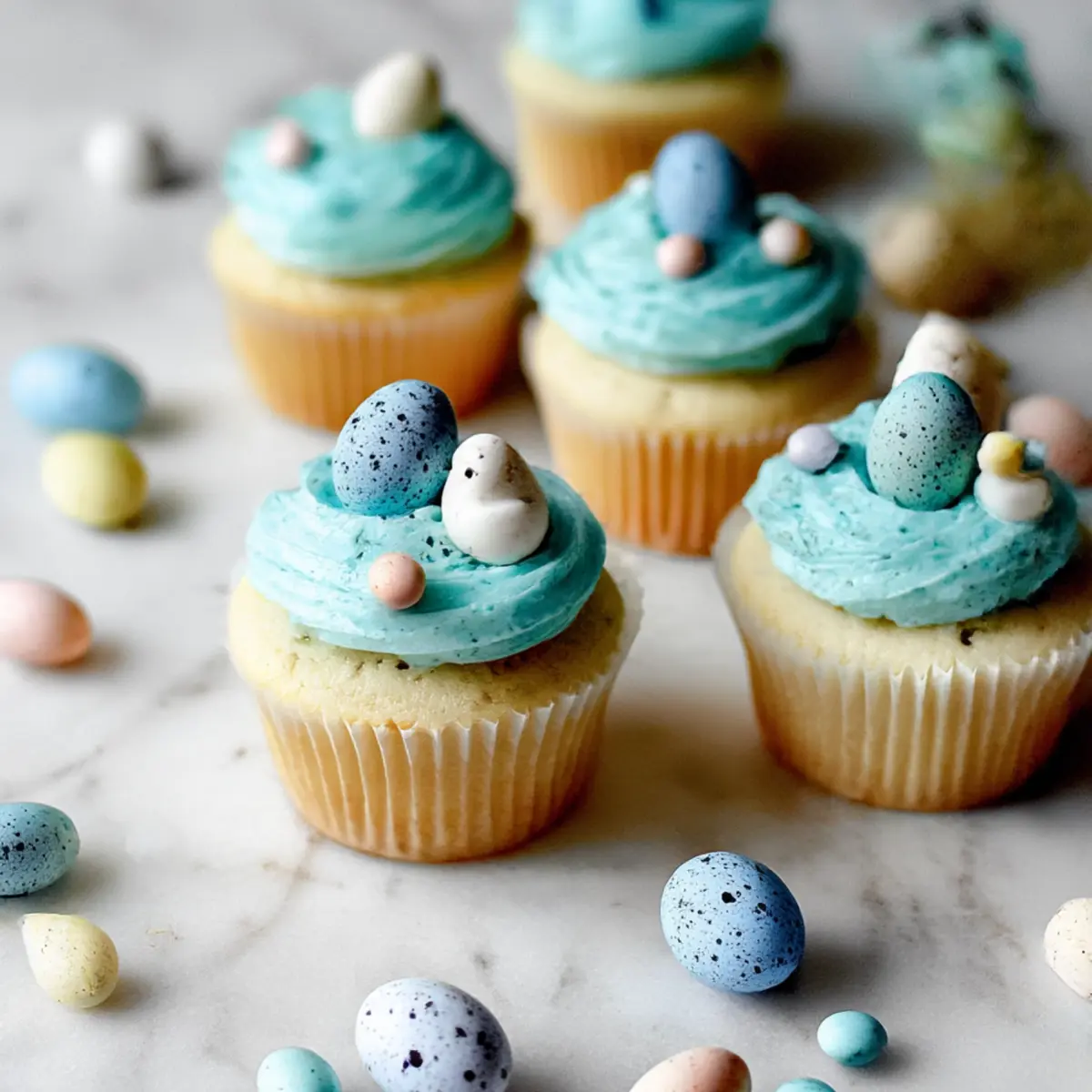
Something about Robin’s Egg Easter Cupcakes just whispers spring to me—the pastel blue speckles, the nest-like swirl, the whole “I can’t believe these look so much like real eggs” magic. Whenever Easter sneaks up, I find myself reaching for this recipe because it’s equal parts whimsical and delicious. These cupcakes are always the first thing guests spot on the table, and inevitably, someone pulls out their phone for a close-up shot before the first bite.
What really gets me, though, is the layering: beneath the playful decoration, you’ve got a soft, buttery white cupcake—almost impossibly light, thanks to egg whites and a scoop of sour cream. It forms a fluffy foundation for the pale blue buttercream (let’s be honest, the food coloring is doing overtime here), and those Cadbury mini eggs nestled on top. And just when you think you’ve nailed the look, a quick flick of cocoa “speckles” turns them utterly charming. Every step feels like getting ready for a holiday brunch, or maybe just brightening up a Tuesday in April.
Robin Eggs Are the Heart of the Spring Table
Every time I bring out a batch of Robin’s Egg Easter Cupcakes, there’s this collective pause—part surprise, part delight. They capture that sense of newness and color that defines spring. Blue-frosted cupcakes, flicked with tiny brown speckles, topped with glossy little chocolate eggs: there’s nothing subtle about how they look, but the flavor’s all about restraint—delicate vanilla, a whisper of almond, and just enough sweet buttercream to keep things luscious but never cloying.
It’s not just for Easter, either. These cupcakes light up birthdays, baby showers, or any brunch where you want to spark a little conversation. One bite, and suddenly grown-ups are reminiscing about hunting for eggs in the grass or fighting over the last mini egg. Trust me, even the kid in you can’t resist.
The Ingredients That Make These Cupcakes Stand Out
- Flour – forms the backbone, giving the cupcakes a tender, delicate crumb that holds its shape.
- Cornstarch – sneaks in extra softness, lending a light and airy bite you’ll notice right away.
- Baking powder & baking soda – uplift the batter, making sure your cupcakes rise into those perfect mounds.
- Salted butter – brings out a balanced, richer flavor and helps create that craveable soft texture.
- Granulated sugar – not just for sweetness, but for golden tops and that barely-there crisp bite.
- Egg whites – keep the crumb snowy-white and impossibly fluffy; yolks would darken the cake, so whites only here.
- Vanilla extract (or vanilla bean paste) – you’ll taste a dreamy, floral vanilla in both the base and buttercream.
- Almond extract (optional) – just a dab levels up the aroma with a nutty nuance; skip it if you prefer straight vanilla.
- Sour cream – makes each bite richer and somehow even moister—a secret weapon in soft cakes.
- Whole milk – gives the batter just enough looseness without drowning out flavor.
- Powdered sugar – this is what makes buttercream airy and smooth, perfect for swirling or piping.
- Heavy cream (or milk) – lets you adjust the buttercream’s texture till it’s perfectly spreadable.
- Coconut extract (optional) – adds the faintest suggestion of tropical flavor; not must-have, but a fun twist.
- Blue food coloring – all about aesthetics; choose your preferred shade, from robin’s egg to cerulean.
- Cocoa powder – the trick to getting those authentic robin’s egg speckles.
- Cadbury mini eggs – iconic candies to crown each cupcake; their pastel shells are both decoration and treat.
See the recipe card below for the full list of ingredients and measurements.
Building Your Miniature Nests Without Stress
Start by heating your oven and lining your muffin tins—trust me, cupcake liners make cleanup (and unwrapping) a breeze. In a roomy bowl, whisk together the dry ingredients, making sure everything’s well-dispersed. You want a batter that’s uniform, so pay attention to any lurking clumps.
Next, whip the butter until it’s not just soft, but pale and almost billowy. Sugar goes in, and you keep beating until you can hardly resist sneaking a fingerful. Add your egg whites, vanilla, and a whisper of almond extract. It should smell so good by now you’ll do a little happy dance.
On low speed, blend in the dry ingredients, scraping around the edges so nothing’s missed. The batter thickens, but whole milk and sour cream loosen it just enough for spooning or scooping—don’t overmix or you’ll lose that gentle crumb.
Fill each liner about two-thirds. Bake until the tops bounce back when pressed and a toothpick comes out basically clean—my kitchen always fills with a sweet, almost floral bakery aroma at this point. Move the cupcakes to cool off; warm cakes + buttercream = sliding disasters.
While they cool, make the buttercream. Softened butter gets whipped until you’ve got a cloud, then you gradually introduce powdered sugar for volume and smoothness. Next come vanilla, maybe coconut, and a touch of cream to get to pipeable territory. Add blue food coloring, mixing just until it’s even—a little streaky can actually look beautiful too.
Spoon your buttercream into a piping bag or just a zip-top bag with the corner snipped, then go big: pipe generous mounds, like a tiny nest. Top each with mini eggs.
For the speckles, whisk cocoa powder with a splash of vanilla extract until you’ve got almost “edible paint.” Dip in a stiff brush, then, aiming away from yourself, flick specks over the blue frosting. Each cupcake will end up perfectly (imperfectly!) speckled.
How the Cupcake and Buttercream Meet in the Middle
What’s special here is the meeting of textures: the base is tender and light, thanks to the egg whites and cornstarch, barely sweet so it acts like a blank canvas. The buttercream’s creaminess is offset by a slight tang from the sour cream in the cupcake (yes, you’ll taste it—just a hint). And those mini eggs? Crunchy shells, melty chocolate insides—true contrast.
You get the coolness of the frosting and the warmth of a freshly-baked cupcake in one bite if you don’t wait too long to frost. I love how the mild vanilla and almond notes in the cake are echoed in the buttercream, keeping everything just cohesive enough.
Texture, Flavor, and That Perfect Bite
Every bite of a Robin’s Egg Easter Cupcake is a tiny journey. The crumb is instantly soft, melting away as soon as it hits your tongue, but sturdy enough to hold up under the frosting’s heap. That pale blue swirl isn’t just pretty—it’s smooth, with a buttery richness and the faintest edge from coconut if you opt in.
The best part, if you ask me, is how the speckles of cocoa cut through the sweetness—tiny hints of bitterness against all the sugar, keeping things balanced. Then, just as you think you’ve got it all figured out, your teeth hit a mini egg: shell shatters, chocolate flows. It’s classic, nostalgic, and somehow, brand new every single spring.
Details That Turn Robin’s Egg Easter Cupcakes Into Showstoppers
- If you want bakery-level smoothness in your frosting, use properly softened butter—not melted, not fridge-cold. Give it a little time, let it breathe.
- For the robin’s egg hue, start slow with the food coloring. Mix in a tiny drop, then add more as you need—it’s easy to overdo the color, and once it’s there, you can’t go back.
- Don’t skip the speckling step. It looks a little messy at first, but as the cocoa dries, those splatters add an authentically wild, natural touch.
- Switching up the extract in the buttercream is fair game: try lemon or orange zest instead of coconut for something punchier.
- Leftovers will keep at room temperature (covered) for a day or so; after that, I tuck them in the fridge just to be safe.
- You can even pipe the buttercream ahead of time and store it in the fridge—just let it come to room temperature and give it a quick whip before frosting.
- Craving even more chocolate? Swap in chocolate mini eggs or drizzle a little melted chocolate under the nest.
Serving Easter Cupcakes with Personality
Robin’s Egg Easter Cupcakes honestly beg to be shown off on your favorite platter. I love arranging them on a simple white cake stand with curls of edible grass or a scattering of extra mini eggs. They slot perfectly into spring spreads, whether you’re doing brunch, afternoon coffee, or going all out with a dessert table.
The look is so playful, you hardly need any other decorations. But if you’re feeling adventurous, pair them with lemon bars, berry tarts, or even plain shortbread cookies—soft cupcakes, tart bars, and something crisp make a trio that never fails. They’re also the ideal make-ahead dessert since the speckles stay striking for days and the cake resists drying out thanks to sour cream.
FAQs about Robin’s Egg Easter Cupcakes
Can I make Robin’s Egg Easter Cupcakes in advance?
Absolutely! You can bake the cupcakes a day or two ahead. Keep them covered at room temperature or refrigerate if your kitchen is warm. Wait to frost and decorate until closer to serving for the freshest flavor and look.
What should I do if I don’t have Cadbury mini eggs for decoration?
Any candy-coated chocolate eggs will work as a substitute, or you can use pastel M&Ms, jelly beans, or even chocolate chips. If you want a more rustic look, try shaping tiny nests from toasted coconut and topping with whatever candies you have.
What’s the best way to store leftover Robin’s Egg Easter Cupcakes?
Once decorated, keep the cupcakes in an airtight container. They’ll stay soft at room temperature for about a day, but for longer storage, place them in the fridge. Let refrigerated cupcakes sit out for a bit to let the buttercream soften before serving.
Can these cupcakes be frozen?
Yes, you can freeze the unfrosted cupcakes for up to two months. Once cooled, wrap them individually and store in a freezer bag. Thaw at room temperature, then frost and decorate after they’ve defrosted for best results.
When all’s said and done, Robin’s Egg Easter Cupcakes turn any ordinary moment into a celebration of spring’s color and flavor. There’s something unmistakably joyful about that sky-blue buttercream and those speckled finishes, especially when the first bite reveals pillowy cake and creamy frosting. Whether you make a batch for a holiday brunch or just because you need a bit of brightness on your dessert plate, these cupcakes have a way of drawing out smiles and second helpings. Here’s to bringing a little extra lightness—both in spirit and in crumb—to your next gathering.
More Delicious Recipes
- Easter Egg Fruit Pizza: This colorful dessert aligns perfectly with spring celebrations, offering a festive twist with its vibrant fruits and creamy base.
- Andes Mint Chocolate Cupcakes: If you love cupcake recipes, these rich mint-chocolate treats provide a delightful flavor contrast similar to the decorations on the Robin’s Egg Cupcakes.
- Green Velvet Cupcakes with Cream Cheese Frosting: Another whimsical cupcake option, these green velvet delights are perfect for spring festivities as well.

Robin's Egg Easter Cupcakes
Ingredients
Equipment
Method
- Preheat oven to 350℉ (177℃). Line muffin pans with cupcake liners. Whisk the flour, cornstarch, baking powder, baking soda, and salt together in a large bowl.
- Beat the butter on high speed in a stand mixer or using a handheld mixer for 1 minute until creamy and light. Add sugar and beat another 2 minutes. Scrape sides and bottom of the bowl.
- Add eggs, vanilla and almond extract, beating on medium-high speed until combined. Beat in sour cream.
- Add the dry ingredients, mixing on low speed just until combined, then scrape the bottom and sides of the bowl.
- With the mixer running on low speed, add the milk, stirring just until combined. Do not overmix.
- Fill each cupcake liner about 2/3 full with batter, then bake for 19-22 minutes, until a toothpick inserted in the center of a cupcake comes out clean.
- Cool completely before frosting.
- In a large bowl using a stand mixer or electric mixer, beat the butter for 2-3 minutes until light and creamy.
- Add 2 cups of the powdered sugar and beat well. Add remaining powdered sugar and beat again.
- Add the heavy cream, vanilla, coconut extract, and salt, beating well to reach a nice spreadable consistency.
- Add food coloring, mixing until combined. Transfer the frosting to a piping bag fitted with a wide round tip or a ziploc bag with one corner cut off. Pipe a large circle or mound of frosting on top of each cooled cupcake.
- Arrange 3 Cadbury mini eggs on top of each cupcake.
- In a small bowl, whisk together the cocoa powder and vanilla extract until thin.
- Dip a stiff pastry brush or new, clean paintbrush into the cocoa mixture and use your fingers to carefully flick the cocoa mixture onto the cupcakes, creating a speckled effect.