
I still remember the first time I made cannoli cookies. It was a quiet Sunday afternoon, and I was craving something nostalgic—but not as labor-intensive as shaping and frying traditional cannoli shells. I pulled out my grandmother’s ricotta cannoli filling recipe and thought: why not turn it into a soft-baked cookie that captures the same creamy, citrus-sweet charm? What came out of the oven was pure joy—crispy edges, tender centers, and a filling that melted on the tongue. Now, these cannoli cookies are my go-to for festive trays, holiday swaps, and cozy coffee breaks. They’re everything you love about cannoli—wrapped in a simplified, bite-sized form.
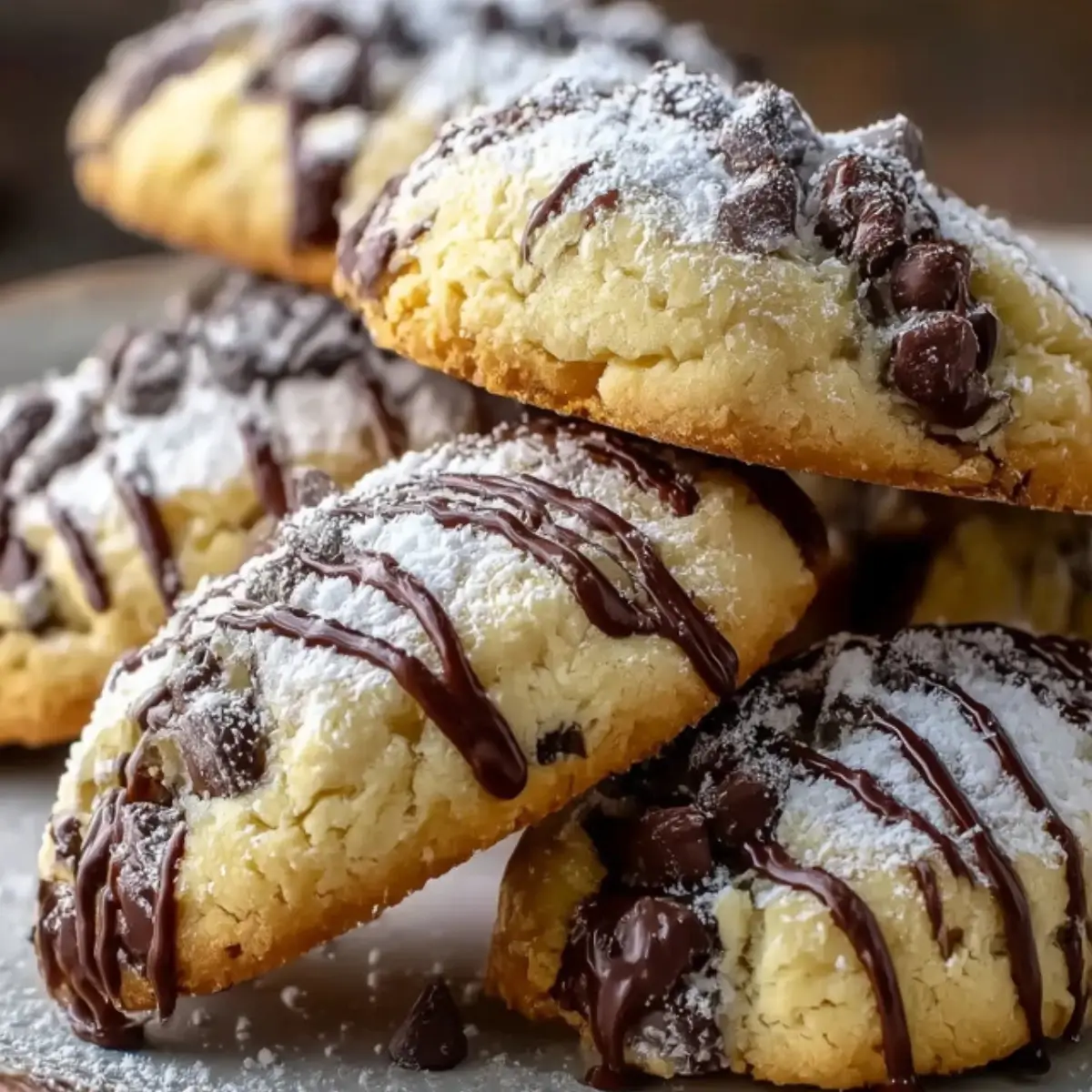
Table of Contents
Ingredients & Substitutions
Each batch of cannoli cookies starts with humble ingredients that create a stunning flavor payoff. From the creamy richness of whole milk ricotta to the bright burst of citrus, every component earns its place in the dough.
Dough Base
- 1 cup (240 ml) all-purpose flour, sifted
- ½ cup (100 g) granulated sugar
- ½ cup (120 g) ricotta cheese (preferably whole milk)
- 1 large egg
- 1 teaspoon vanilla extract
- 1 teaspoon lemon zest
Substitutions:
- Ricotta: Swap with mascarpone for extra creaminess.
- All-purpose flour: Almond flour can be used for a gluten-free variation (adjust liquid if needed).
- Lemon zest: Orange zest offers a more traditional cannoli twist.
Filling Add-ins
- ½ cup (75 g) mini chocolate chips
- ½ cup (75 g) chopped pistachios
Substitutions:
- Chocolate chips: Dark chocolate chunks, raisins, or dried cranberries.
- Pistachios: Toasted hazelnuts or walnuts for a different crunch.
Finishing Touch
- Powdered sugar for dusting (optional but recommended)
Equipment You’ll Need
You don’t need any fancy gear to bake cannoli cookies, just a few kitchen basics.
- 2 large mixing bowls
- Whisk and silicone spatula
- Rolling pin (or clean wine bottle)
- Sharp knife or pizza cutter
- Measuring cups and spoons
- Baking sheets lined with parchment paper
- Cooling rack
Optional tools like a citrus zester or cookie scoop can help, but aren’t essential.
Step-by-Step Instructions
This six-step method keeps the process simple while maximizing flavor and texture. Cannoli cookies come together in under an hour, including resting time.
Step 1: Make the Dough (10 minutes)
Preheat your oven to 350°F (175°C). In one bowl, whisk together the sifted flour and sugar. In a separate bowl, combine the ricotta, egg, vanilla extract, and lemon zest. Mix until smooth. Gradually fold the dry mixture into the wet, stirring just until a soft dough forms. Avoid overmixing to keep the cookies tender.
Step 2: Let the Dough Rest (30 minutes)
Cover the bowl with plastic wrap or a clean towel. Rest the dough at room temperature for 30 minutes. This step relaxes the gluten and gives the flour time to hydrate, which improves the final texture.
Step 3: Roll and Cut the Dough (10 minutes)
Dust your surface with flour and roll the dough to about ¼ inch (6 mm) thick. Use a sharp knife or pizza cutter to slice rectangles roughly 2 by 3 inches. They don’t have to be perfect—rustic edges add charm.
Step 4: Make the Filling and Assemble (5 minutes)
In a small bowl, stir together the ricotta, mini chocolate chips, and pistachios. Spoon about 1 tablespoon of filling into the center of each rectangle. Fold over one side and pinch the edges tightly to seal.
Step 5: Bake Until Golden (15–18 minutes)
Place cookies on the prepared baking sheets, spaced at least 1 inch apart. Bake for 15 to 18 minutes or until the edges are golden brown. Let them cool on the baking sheet for 3 minutes, then transfer to a wire rack.
Step 6: Cool and Dust (after cooling)
Once the cannoli cookies have cooled completely, dust them generously with powdered sugar. This not only adds sweetness but also mimics the look of traditional cannoli.
Why This Recipe Works
Cannoli cookies succeed because they respect the essence of a classic cannoli while embracing the convenience of a drop cookie.
- Ricotta filling provides moisture, richness, and a signature tang.
- Mini chips and pistachios add contrast in texture—creamy, crunchy, melty.
- No frying required keeps the process accessible and less messy.
- Dough resting reduces toughness and helps cookies bake more evenly.
- High-heat bake time ensures a golden exterior without drying the center.
The result? A cookie that mimics cannoli flavor without requiring a piping bag or cannoli tubes.
Pro Tips & Variations
Customize your cannoli cookies to match the season, your pantry, or your cravings.
- Almond extract: Add ¼ teaspoon to the dough or filling for a nutty undertone.
- Orange liqueur: Stir a teaspoon into the filling for a grown-up version.
- Cinnamon sugar finish: Instead of powdered sugar, roll warm cookies in cinnamon sugar.
- Double the batch: This recipe doubles cleanly—just mix the dough in a stand mixer to ease your hands.
- Make minis: Cut dough into 1×1.5-inch pieces for bite-sized treats—reduce bake time by 2–3 minutes.
Make-Ahead, Storage & Freezing
Cannoli cookies hold up beautifully with the right storage methods.
- Room temperature: Store in an airtight container for up to 3 days. Use parchment between layers to prevent sticking.
- Freezing unbaked: Assemble and freeze raw cookies on a tray. Once solid, transfer to a bag or container. Bake from frozen, adding 2–3 minutes.
- Freezing baked: Let cool fully. Wrap individually or stack with parchment. Freeze for up to 1 month.
- Reheating: Warm briefly in a 300°F (150°C) oven for 5 minutes to revive texture.
Serving Suggestions & Pairings
Presentation and pairings can turn cannoli cookies into an elegant dessert course or casual coffee treat.
- Holiday trays: Arrange with biscotti, pizzelles, or amaretti.
- Coffee pairings: Serve with espresso, cappuccino, or strong black tea.
- After-dinner sweet: Pair with dessert wine, like Moscato or Vin Santo.
- Garnish ideas: Sprinkle chopped pistachios or drizzle melted chocolate before serving.
Dietary Notes & Allergen Considerations
Cannoli cookies contain several common allergens, but adjustments are possible.
- Gluten-free: Substitute almond flour or a 1:1 gluten-free baking mix.
- Dairy-free: Use dairy-free ricotta alternatives (almond- or tofu-based). Skip chocolate chips or use vegan versions.
- Nut-free: Omit pistachios or swap with sunflower seeds or crisped rice for texture.
- Vegetarian: These cookies are naturally vegetarian with no meat or gelatin ingredients.
Always verify packaged ingredients to match specific dietary needs.
Troubleshooting & Common Mistakes
Bake with confidence by watching for these common missteps.
- Cookies spread too much: Dough wasn’t rested long enough or oven was too hot.
- Filling leaks out: Edges weren’t pinched firmly; try sealing with a dab of water.
- Too dense: Dough may have been overmixed. Use a light hand during folding.
- Dry cookies: Overbaked—check for golden edges, not dark brown.
- Crumbly dough: Ricotta may have been too dry or flour compacted—add 1 teaspoon milk if needed.
FAQs
Can I make cannoli cookies in advance?
Yes. Cannoli cookies are great for prepping ahead. You can refrigerate the dough overnight or freeze the shaped cookies before baking.
How do I know when cannoli cookies are fully baked?
Look for golden brown edges and a firm top. The centers should feel set but not hard. Overbaking will dry them out.
Can I make cannoli cookies without nuts?
Absolutely. Simply omit the pistachios, or use something else with crunch like toasted oats or seeds.
What’s the best way to reheat frozen cannoli cookies?
Let them thaw at room temperature, then reheat in a 300°F oven for 3–5 minutes to refresh the exterior.
Can I double the cannoli cookies recipe?
Yes, this recipe scales well. If doubling, use a stand mixer to avoid overmixing by hand and ensure even blending.
Conclusion
Cannoli cookies capture everything you love about traditional Italian cannoli—without the fuss. With a golden, tender shell and a creamy, chocolate-studded filling, these cookies are a celebration of flavor and simplicity. Whether you’re baking for a holiday table or just craving something special, they deliver charm in every bite.
So next time you want to wow your guests or treat yourself, roll out a batch of cannoli cookies. They’re easy to make, easy to love, and impossible to forget.
More Tasty Ideas
- Butter Pecan Cookies: These cookies offer a rich, nutty flavor with a melt-in-your-mouth texture, making them a natural complement to cannoli cookies. They share the same comforting sweetness and are perfect for holiday cookie trays or cozy afternoon treats.
- Sugar Cookie Cheesecake: A creamy, tangy filling over a sweet cookie crust creates a dessert that channels similar textures to cannoli cookies. This recipe blends the smoothness of cheesecake with the nostalgic appeal of sugar cookies.
- Neapolitan Christmas Cookies: Layered with chocolate, vanilla, and strawberry, these colorful cookies echo the variety and charm of Italian desserts like cannoli cookies. They offer visual appeal and flavor complexity in every bite.
Cannoli Cookies

Cannoli Cookies are a delightful twist on the classic Italian dessert, combining a tender, golden-baked cookie shell with a creamy ricotta filling. These cookies are filled with mini chocolate chips and chopped pistachios, offering a balanced blend of sweet, nutty, and citrusy flavors in every bite.
- Prep Time: 30 minutes
- Cook Time: 18 minutes
- Total Time: 48 minutes
- Yield: 18 cookies
- Category: Dessert
- Method: Baking
- Cuisine: Italian
- Diet: Vegetarian
Ingredients
- 1 cup (240 ml) all-purpose flour, sifted
- 1/2 cup (100 g) granulated sugar
- 1/2 cup (120 g) ricotta cheese, whole milk preferred
- 1 large egg
- 1 teaspoon vanilla extract
- 1 teaspoon lemon zest
- 1/2 cup (75 g) mini chocolate chips
- 1/2 cup (75 g) chopped pistachios
- Powdered sugar, for dusting
Instructions
- Preheat oven to 350°F (175°C). Line baking sheets with parchment paper.
- In a large bowl, whisk together the flour and granulated sugar.
- In another bowl, mix ricotta, egg, vanilla extract, and lemon zest until smooth.
- Gradually stir the dry ingredients into the wet mixture until a soft dough forms. Do not overmix.
- Cover the dough and let it rest at room temperature for 30 minutes.
- Dust a work surface with flour and roll the dough to 1/4 inch thickness.
- Cut the dough into rectangles or squares, about 2×3 inches.
- In a small bowl, mix ricotta, mini chocolate chips, and chopped pistachios for the filling.
- Place a spoonful of the filling in the center of each rectangle and fold to form a pocket. Pinch edges to seal.
- Place the cookies on prepared baking sheets, leaving space between each.
- Bake for 18 minutes or until golden brown.
- Let cookies cool on the baking sheets for a few minutes, then transfer to a wire rack to cool completely.
- Once cooled, dust generously with powdered sugar before serving.
Notes
- Substitute mascarpone for ricotta for a richer filling.
- Use almond flour for a gluten-free version (adjust liquids as needed).
- Ensure ricotta is well-drained to prevent soggy cookies.
- Fold and seal edges tightly to prevent filling from leaking.