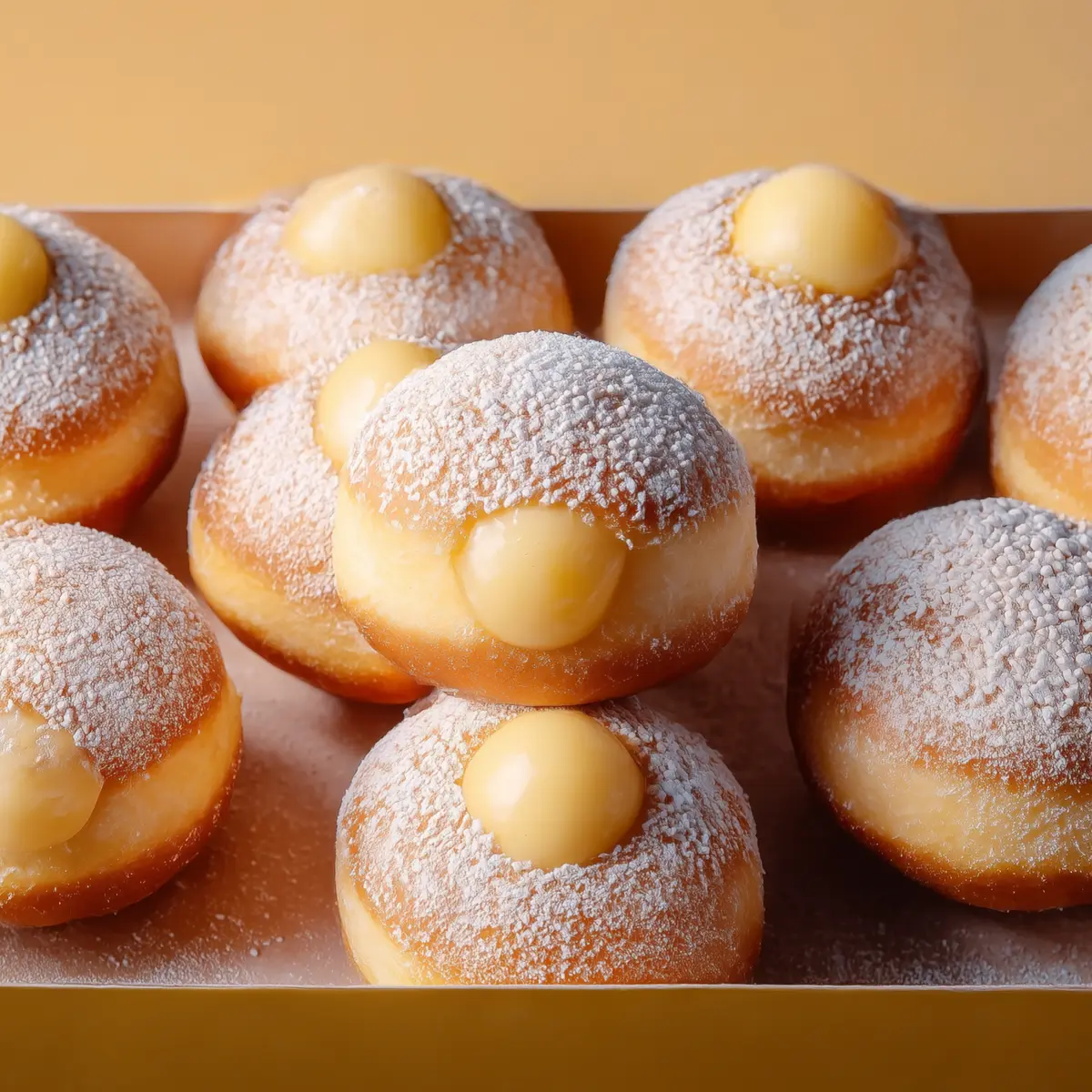
If you’ve been craving something warm, pillowy, and sweet to brighten your kitchen, you’re in good company. Every time I make Bomboloni, the way the scent of fresh dough and gently caramelizing sugar drifts through the house feels downright irresistible. These classic Italian doughnuts truly are a little celebration for your taste buds—golden and delicate on the outside, stuffed with cool, silky pastry cream in the center.
I still remember the first time I bit into a still-warm Bombolone at a tiny Roman bakery: powdered sugar stuck to my fingertips, and that dreamy, creamy filling had me closing my eyes in bliss. Baking them at home is surprisingly doable, and honestly, even more magical when they’re fresh from your own pan.
Why These Bomboloni Are Worth Making at Home
Who can resist a freshly fried doughnut with a crisp, shimmering sugar coating and a surprise burst of creamy vanilla custard inside? Bomboloni aren’t your average doughnut. They’re slightly chewy at the edges, cloud-like within, and each is filled (never hollow, never dry).
What makes these Italian treats really shine is their balance—a soft, yeast-risen bite paired with rich pastry cream that’s brightened by just a hint of lemon zest. You don’t need fancy bakery equipment, just a little time and a few simple pantry staples. Plus, making Bomboloni at home means you’re in charge of every detail: how much filling, how sweet, and whether you want to try a twist on the classic.
There’s something extra satisfying about serving these warm to family or friends and seeing them light up after that first bite. Whether you’re seeking an impressive weekend baking project or a festive dessert for gatherings—these Bomboloni always hit the spot.
What You Need for Perfect Bomboloni
A handful of thoughtfully chosen ingredients come together for truly outstanding Bomboloni. Here’s what makes each one matter:
- flour – The real magic starts here. Combining bread flour for strength and 00 flour for tenderness creates that classic light yet satisfying chew. If 00 flour is tricky to track down, all-purpose works in a pinch.
- Yeast – Fast-action yeast wakes the dough up and fills it with beautiful bubbles. Just be sure your yeast is fresh and check the back of the packet if you’re unsure about how to activate it.
- Eggs – These lend the dough richness and just a little extra softness. Room temperature eggs blend in effortlessly and make for silkier dough.
- Butter – Softened butter folds into the dough and gives the Bomboloni their almost brioche-like crumb and a hint of creaminess that lingers with every bite.
- Sugar – A double duty ingredient: mixed into the dough for sweetness and also rolled on after frying for sparkle and crunch.
- Vanilla – Whether you go for paste, extract, or even the seeds scraped from a vanilla bean, this gives a deep, alluring aroma to both dough and cream.
- Milk – Lukewarm milk is the backdrop for a pillowy rise, giving the dough moisture and the pastry cream that signature velvetiness.
- Salt – Just a pinch balances the sweetness and stops the dough from tasting bland.
- Egg Yolks – Crucial for the pastry cream’s silky, thick finish. The more vibrant your yolks, the better the color and flavor.
- Cornstarch – The secret to a luscious pastry cream that isn’t runny, making each Bombolone blissfully creamy inside without mess.
- Lemon Zest – A sprinkle in the custard lifts and brightens the filling, cutting through richness for a little extra zing.
See the recipe card below for the full list of ingredients and measurements.
Step-by-Step: How to Make Bomboloni Like an Italian Nona
Ready for all the cozy, hands-on fun? Here’s how I break down the process so each Bombolone comes out beautifully airy and brimming with custard.
- Mix and knead the dough. Pop your bread flour, 00 flour, sugar, and yeast in a stand mixer bowl, and stir them gently together. Add in softened butter, eggs, a good splash of warm milk, a hit of vanilla, and a pinch of salt. With the dough hook, knead everything on low until you get a smooth, elastic dough—it’ll feel slightly tacky, a bit like a marshmallow that wants to stick but pulls away cleanly.
- Let the dough rise. Shape it into a ball and transfer to a greased bowl. Cover with plastic wrap. Let it sit undisturbed until it gets super puffy and triples in size—the dough will be incredibly airy beneath your fingertips.
- Shape and proof the Bomboloni. Once risen, punch down the dough gently to let the air out. On a clean (no flour needed) surface, knead very lightly, then roll to about a half-inch thickness. Use a round cutter or glass to stamp out generous circles. Set them on parchment, giving each enough space. Cover again and let them rise—you’re looking for soft, pillowy rounds that barely resist a gentle press.
- Cook the pastry cream filling. As the doughnuts proof, whisk together egg yolks, sugar, vanilla, and a kiss of lemon zest. Add in cornstarch for body, then gradually whisk in hot—but not boiling—milk. Return everything to the saucepan and stir patiently over low heat. You want the cream to thicken up to a glossy, pudding-like texture. Cover with wrap right against the surface to keep it silky; let cool fully.
- Fry the Bomboloni. Heat oil in a deep pot until a scrap of dough sizzles and rises to the top. Using parchment squares, gently lower each dough round into the oil, then peel the paper away with tongs. Fry in batches—no crowding. Flip once golden, and let both sides puff and color. As each finishes, drain briefly, then roll in plenty of caster or powdered sugar while they’re still warm for that dreamy, sparkly shell.
- Fill with cream. Let the doughnuts cool just enough to handle. Use a paring knife to nudge a little hole in the side, then load your piping bag up with pastry cream and be delightfully generous as you fill each Bombolone until you feel the weight change.
- Serve warm and share. The final flourish is always best right away—still crisp at the edges, squidgy in the middle, and billowing with custard. Set out a stack on a tray and step back; they’ll disappear faster than you think.
Little Tricks for the Best Homemade Bomboloni
If you want Bomboloni that rival your favorite bakery, here are a few easy tweaks and fixes I swear by:
Let the dough stay a little sticky—it can be tempting to add more flour if it clings to your hands, but embrace the slight tackiness. That little bit of stick is exactly what makes these doughnuts feather-light after frying.
When proofing, give your dough the time it needs. If your kitchen is cold, tuck the bowl in your (turned off) oven with just the oven light on, or near a warm, draft-free corner of your house.
Keep the oil temperature steady while frying—if it’s too hot, the outside browns before the middle finishes. If it’s too cool, you’re in for soggy doughnuts. Work in batches and be patient; Bomboloni love a little space to puff and crisp.
Don’t skip rolling the warm doughnuts in sugar right after frying. The sugar never sticks quite as well if you wait until they cool down.
If your pastry cream turns lumpy, don’t panic. Just whisk it vigorously, or if needed, strain it through a sieve for that velvety finish.
For leftovers (if you’re lucky enough to have any), keep Bomboloni in an airtight container and try to enjoy them within a day—the magic is truly in the freshness. A quick 10-second zap in the microwave revives their softness.
Serving Ideas and Creative Filling Twists
Bomboloni are fabulous just as they are, but the beauty of homemade means you can riff and play as much as you like.
Swap out the classic pastry cream for other fillings: smooth Nutella, bright raspberry jam, lemon curd, or even whipped mascarpone with a dot of espresso for a touch of tiramisu-vibes.
Try dunking warm, sugar-coated doughnuts into rich hot chocolate or pairing them with a bitter espresso—this is how they’re often enjoyed in Italy, especially on chilly mornings or after festive meals.
For little hands (or bigger ones with a sweet tooth), you can roll finished Bomboloni in cinnamon sugar or dip the tops in melted dark chocolate.
Make them ahead for holidays or brunches: fry and roll the doughnuts in sugar the evening before, but wait to fill them until just before serving for maximum freshness.
Hosting a dessert spread? Set up a “Bomboloni bar” with different creams, jams, and even whipped cream for guests to fill their own—guaranteed to bring plenty of smiles to the table.
FAQs about Bomboloni
How should I store leftover Bomboloni so they stay fresh?
Keep leftover Bomboloni in an airtight container at room temperature if you’ll eat them the same day. For longer storage, refrigerate them, but know that the texture is always best when they’re enjoyed shortly after frying and filling. If they start to stale, a short burst in the microwave brings back their softness.
Can Bomboloni be frozen?
Yes, you can freeze Bomboloni, but for best results, freeze them unfilled. After they’ve cooled, store in a freezer-safe bag for up to a month. Defrost at room temperature and warm in the oven; fill with pastry cream or jam just before serving for the freshest taste.
What’s the best substitute if I can’t find 00 flour for my Bomboloni?
If 00 flour isn’t available, simply use all-purpose flour in its place. The texture may be ever-so-slightly less silky, but your Bomboloni will still be airy and delicious. Bread flour should always stay in the mix for structure, but don’t worry if your pantry’s a little sparse.
Do I have to use pastry cream, or can Bomboloni be filled with something else?
Not at all! Pastry cream is the classic, but these doughnuts are equally delicious filled with chocolate spread, fruit preserves, whipped cream, or even a touch of lemon curd. Feel free to get creative based on what you have and what you crave—Bomboloni are endlessly customizable.
Warm, sugary, and oh-so-light, Bomboloni are the kind of treat that makes an ordinary afternoon feel worth celebrating. There’s something magical about biting into that crisp, sugared shell and finding cool, rich cream hidden inside. Next time you’re craving a little Italian bakery magic, let these Bomboloni transport you straight to café tables and sun-soaked piazzas—right from your own kitchen. Dust off your apron, gather your favorite people, and enjoy every last soft, creamy bite together.
More Tasty Ideas
- St Joseph’s Pastries: These creamy-filled pastries are similar in texture and filling to Bomboloni, perfect for those who love custard desserts.
- Irish Apple Cake with Custard Sauce: For a different twist on creamy desserts, this cake pairs perfectly with a rich custard that elevates its flavor.
- Irish Tea Cake: A light and flavorful cake that makes a great companion to the sweetness of Bomboloni, offering another delightful baked treat.

Bomboloni – Italian Doughnuts: A Taste of Sweet Indulgence
Ingredients
Equipment
Method
- Start by combining the bread flour, 00 flour, granulated sugar, and yeast in the bowl of your stand mixer. Stir to combine all the dry ingredients. Then, add the softened butter, eggs, lukewarm milk, vanilla paste, and salt. Attach the dough hook to the mixer and knead the dough on a low speed (speed 2 on a KitchenAid mixer) for about 10 minutes. The dough should become smooth, elastic, and slightly tacky to the touch.
- If the dough feels too sticky, avoid adding excess flour. Instead, you can use a small amount of flour to help shape the dough, but remember that the dough should remain a bit sticky. This tackiness is what will help create the fluffy texture of the doughnuts.
- Once the dough is ready, shape it into a smooth ball and place it in a greased bowl. Cover the bowl with plastic wrap and allow the dough to rise for 2-3 hours, or until it has tripled in size. This proving time allows the yeast to work, creating the light, airy texture of the dough.
- After the dough has risen, punch it down gently to release the air. Turn the dough out onto a clean, unfloured surface and knead it briefly to smooth it out. Then, roll the dough out into a rectangle about 1.5 cm (½ inch) thick. Using a round cookie cutter (about 3.5 inches in diameter), cut out doughnut shapes from the dough. You can also use a glass or any other round object that is similar in size.
- Place the cut doughnuts on a surface lined with parchment paper. Make sure there is enough space between each doughnut, as they will expand during the second proving. Cover the doughnuts loosely with plastic wrap and let them prove for another 1-1.5 hours, or until they have tripled in size. The doughnuts should feel light and airy when pressed gently.
- While the doughnuts are proving, prepare the pastry cream. Start by whisking the egg yolks, sugar, vanilla, and lemon zest in a large bowl. Add the cornstarch and whisk until smooth.
- In a saucepan, heat the milk over medium heat until it is hot, but not boiling. Once the milk is hot, remove it from the heat and let it sit for a minute. Slowly pour the hot milk into the egg mixture while whisking constantly. This gradual pouring prevents the eggs from scrambling.
- Return the mixture to the saucepan and heat it over low heat, stirring constantly, until the cream thickens. This can take about 10-15 minutes, so be patient. Once the cream has thickened to a custard-like consistency, remove it from the heat. Pour the pastry cream into a clean bowl and cover it with plastic wrap, ensuring that the wrap touches the surface of the cream to prevent a skin from forming. Allow it to cool to room temperature.
- Once the doughnuts have proved and the pastry cream is ready, it’s time to fry the Bomboloni. Heat a deep pan or pot of oil to around 170°C (337°F). If you don’t have a thermometer, you can test the oil by dropping a small piece of dough into it. If it sizzles and rises to the surface, the oil is hot enough.
- Cut the parchment paper into squares, with each square large enough to hold a doughnut. Carefully drop the doughnuts, with the parchment paper underneath, into the hot oil. Using tongs, remove the parchment paper immediately. Fry the doughnuts in batches, making sure not to overcrowd the pan. Fry each doughnut for 2 minutes on one side, then flip and fry for another 2 minutes on the other side until golden brown.
- Remove the doughnuts from the oil and drain them on paper towels for about 2 minutes to remove excess oil. While the doughnuts are still warm, roll them in caster sugar or powdered sugar.
- Once the doughnuts have cooled slightly but are still warm, it’s time to fill them with the delicious pastry cream. Use a small knife to make a small incision in the side of each doughnut. Then, use a piping bag fitted with a nozzle to fill each doughnut with pastry cream. Be generous with the filling, as the pastry cream should be a delicious surprise with each bite.
- Bomboloni are best served immediately after they are filled, while they’re still warm. The crispy, sugary exterior combined with the soft, creamy filling creates a treat that is nothing short of magical. Whether you’re enjoying them as an afternoon snack or serving them as part of a festive occasion, Bomboloni are sure to impress.
- You can also experiment with other fillings, such as Nutella, fruit jams, or whipped cream, for a fun twist on the traditional Bombolone. For a truly indulgent experience, try serving Bomboloni with a cup of espresso or hot chocolate, making it a perfect treat to enjoy with loved ones.